Simplifying enterprise transaction screening investigations, contributing to over $500k in new ARR
Product Design
Enterprise SaaS

Overview
1
Outcomes
Contributed to winning two enterprise customers through demonstrations of the redesigned Transaction Screening experience.
Redesigned the end-to-end analyst investigation workflow, improving usability, consistency and decision-making.
Established reusable interaction patterns that now underpin future AI-assisted investigation workflows.
The Challenge
2
Fragmented Investigation
One Workflow, Two Very Different Problems
Transaction Screening had been created by splitting the existing Transaction Monitoring experience.
While this accelerated development, it inherited workflows, terminology and interaction patterns designed for behavioural monitoring rather than live payment screening.
The result was a workflow optimised around system architecture rather than the fast-paced nature of transaction screening investigations.
Repetitive False Positives
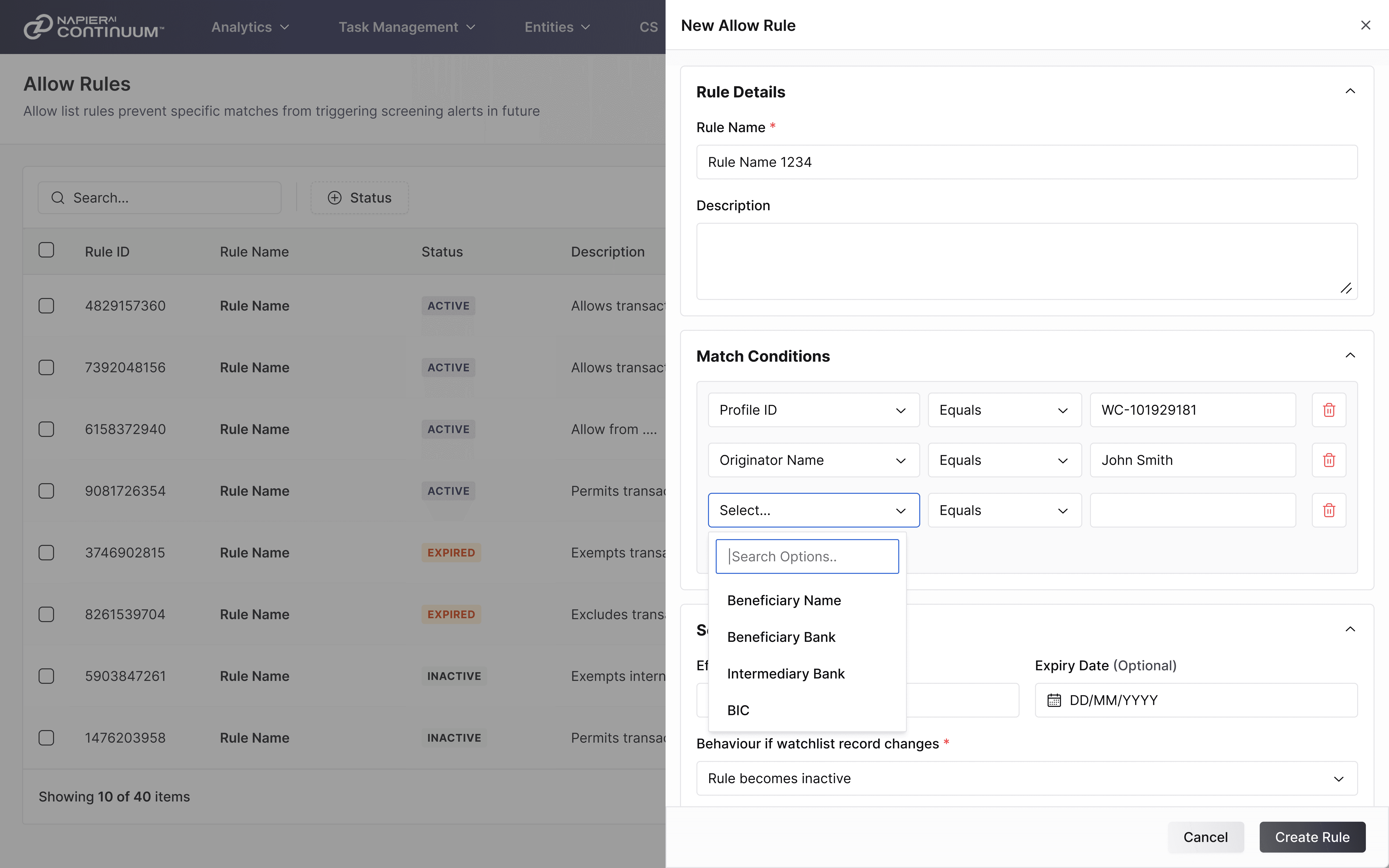
Previously resolved false positives repeatedly returned because analysts couldn't easily convert investigation outcomes into reusable allow-list rules.
Understanding the Legacy Experience
3
The analyst investigation journey had evolved around the platform's architecture rather than how investigations naturally progressed.
Resolving an alert meant interpreting technical rule output, completing administrative steps and switching between systems before the investigation could progress.


The workflow prioritised system processes over analyst decision-making, introducing unnecessary friction before any meaningful investigation could begin.
Research Insights
4
Key Product Decisions
5
We iterated extensively as our understanding of analyst workflows evolved. The investigation layout, transaction summary and information architecture went through multiple iterations. Early concepts grouped screening entities into tabs to improve organisation, but user feedback showed analysts frequently performed bulk actions across entities, making this approach inefficient.

Competitor research initially influenced a card-based presentation for screening hits. However, usability testing revealed this reduced analysts' ability to quickly scan and compare multiple hits—a core workflow during Level 1 investigations. We ultimately moved to a dense, table-based layout that prioritised speed and efficiency.

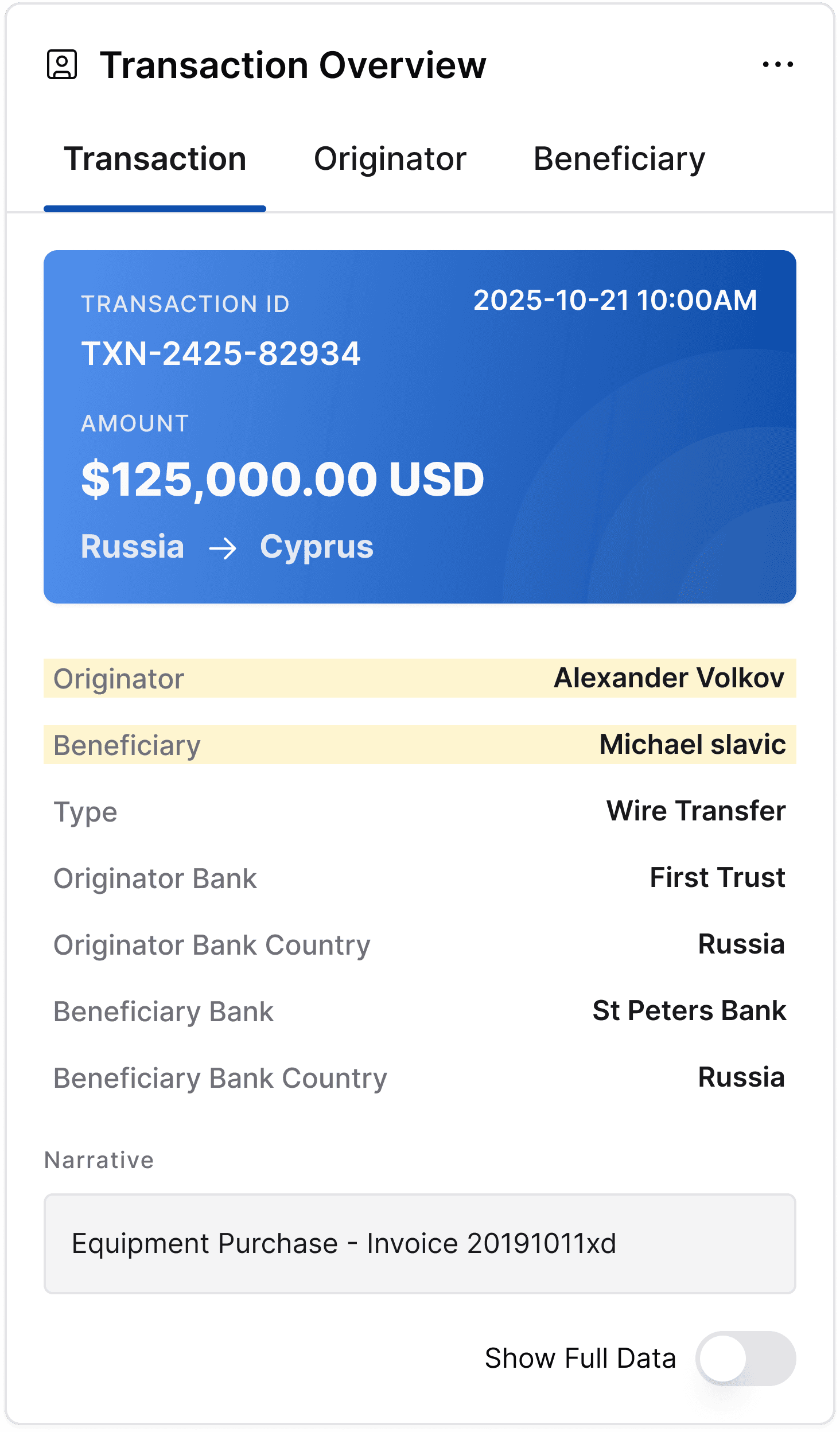
We explored configurable transaction fields to reduce visual clutter by allowing analysts to choose which attributes were displayed. The feature was ultimately removed, as varying transaction types and inconsistent analyst configurations increased the risk of important information being missed.

02 Progressive Information Hierarchy
Investigations rarely require every piece of information at once. I prioritised evidence based on analyst workflows, revealing supporting detail only when it became relevant.

This reduced visual noise while ensuring analysts could still access supporting evidence when required.